




RAPPORTO IN LINGUA INGLESE
Marzo 2019,
II Ed. ,
91 pagine
Prezzo (licenza per singolo utente):
EUR 800 / USD 848
Contattateci per licenze corporate e multiuser
Lingua: English
Codice report: W25
Editore: CSIL
Status: available for online purchase and immediate download
Download
Indici dei contenuti

Download
Abstract
CSIL research report Africa Furniture Outlook offers an overview of the African furniture industry with statistical data (production, consumption, imports and exports of furniture for 2017) and 2019 – 2020 furniture market forecasts for 54 countries.
THIS REPORT PROVIDES
An introductive part describing the African furniture sector and providing prospects for the furniture market in the continent:
- Furniture consumption in Africa: 2017 apparent consumption and market prospects up to 2020, by country and by geographical area (North Africa, West Africa, Central Africa, East Africa and Southern Africa).
- Furniture imports to Africa: by country and by geographical area (North Africa, West Africa, Central Africa, East Africa and Southern Africa), including a matrix showing the main countries of origin of furniture imports.
- Large urban markets in Africa (urbanisation will be very rapid, with important implications for the growth of furniture consumption).
Statistics and outlook data are also available in a country format. For the 54 considered countries, the report offers:
Furniture market size, furniture production and furniture trade (2017).
Country rankings to place all statistics in a broad African context.
Real growth of furniture consumption. Market forecasts up to 2020.
Countries of origin of furniture imports.
Additional socio economic indicators (Total household consumption expenditure, Total GNP at purchasing power parity, Per capita GNP at purchasing power parity, Urban population, Broadband internet connections and mobile cellular subscriptions, International tourists arrivals).
KEY ISSUES OF THIS STUDY
- A picture of opportunities for exporters of furniture to Africa.
- A rich collection of key country-data, allowing comparisons among countries.
- 2019 and 2020 forecasts on the evolution of furniture markets in the considered countries, based on the analysis of furniture industry dynamics and of macro-economic indicators.
Countries covered: Algeria, Angola, Benin, Botswana, Burkina Faso, Burundi, Cabo Verde, Cameroon, Central African Republic, Chad, Comoros, Congo Dem Rep, Congo Rep, Cote d’Ivoire, Djibouti, Egypt, Equatorial Guinea, Eritrea, Eswatini (formerly Swaziland), Ethiopia, Gabon, Gambia, Ghana, Guinea, Guinea-Bissau, Kenya, Lesotho, Liberia, Libya, Madagascar, Malawi, Mali, Mauritania, Mauritius, Morocco, Mozambique, Namibia, Niger, Nigeria, Rwanda, Sao Tome and Principe, Senegal, Seychelles, Sierra Leone, Somalia, South Africa, South Sudan, Sudan, Tanzania, Togo, Tunisia, Uganda, Zambia, Zimbabwe.
Furniture imports by area in Africa.
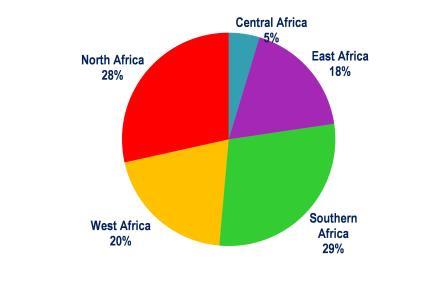
Total furniture imports into Africa (both from other African countries and other areas of the world) exceeds USD 3 billion, corresponding to about 2% of world imports as estimated by CSIL.
Southern Africa and North Africa are the areas with the highest level of imports among the African regions.
Abstract of Table of Contents
PART I – OVERVIEW
The African furniture sector
Furniture consumption in Africa
- Apparent furniture consumption for single countries and by geographical area
Major urban markets for furniture in Africa
- Large urban markets by population and main cities
Imports of furniture: a picture of opportunities for furniture exporters arising from the increasing imports of African countries
- Breakdown of furniture imports and imports penetration by region
- Origin of Imports for 10 main importing countries
The outlook for furniture consumption
- Forecasts of furniture consumption to 2020
PART II – FURNITURE INDICATORS
Furniture sector’s overview by country
- Origin of imports of furniture to African countries
- Furniture market outlook 2019 – 2020
COUNTRY TABLES
For the 54 considered countries:
- Furniture market size, furniture production and furniture trade 2017
- Furniture market forecasts up to 2020
- Countries of origin of furniture imports
- Socio-economic indicators
APPENDIX – Notes, presentation conventions, classification of countries
CSIL research report Africa Furniture Outlook offers an overview of the African furniture industry with statistical data (production, consumption, imports and exports of furniture for 2017) and 2019 – 2020 furniture market forecasts for 54 countries.
THIS REPORT PROVIDES
An introductive part describing the African furniture sector and providing prospects for the furniture market in the continent:
- Furniture consumption in Africa: 2017 apparent consumption and market prospects up to 2020, by country and by geographical area (North Africa, West Africa, Central Africa, East Africa and Southern Africa).
- Furniture imports to Africa: by country and by geographical area (North Africa, West Africa, Central Africa, East Africa and Southern Africa), including a matrix showing the main countries of origin of furniture imports.
- Large urban markets in Africa (urbanisation will be very rapid, with important implications for the growth of furniture consumption).
Statistics and outlook data are also available in a country format. For the 54 considered countries, the report offers:
Furniture market size, furniture production and furniture trade (2017).
Country rankings to place all statistics in a broad African context.
Real growth of furniture consumption. Market forecasts up to 2020.
Countries of origin of furniture imports.
Additional socio economic indicators (Total household consumption expenditure, Total GNP at purchasing power parity, Per capita GNP at purchasing power parity, Urban population, Broadband internet connections and mobile cellular subscriptions, International tourists arrivals).
KEY ISSUES OF THIS STUDY
- A picture of opportunities for exporters of furniture to Africa.
- A rich collection of key country-data, allowing comparisons among countries.
- 2019 and 2020 forecasts on the evolution of furniture markets in the considered countries, based on the analysis of furniture industry dynamics and of macro-economic indicators.
Countries covered: Algeria, Angola, Benin, Botswana, Burkina Faso, Burundi, Cabo Verde, Cameroon, Central African Republic, Chad, Comoros, Congo Dem Rep, Congo Rep, Cote d’Ivoire, Djibouti, Egypt, Equatorial Guinea, Eritrea, Eswatini (formerly Swaziland), Ethiopia, Gabon, Gambia, Ghana, Guinea, Guinea-Bissau, Kenya, Lesotho, Liberia, Libya, Madagascar, Malawi, Mali, Mauritania, Mauritius, Morocco, Mozambique, Namibia, Niger, Nigeria, Rwanda, Sao Tome and Principe, Senegal, Seychelles, Sierra Leone, Somalia, South Africa, South Sudan, Sudan, Tanzania, Togo, Tunisia, Uganda, Zambia, Zimbabwe.
Furniture imports by area in Africa.
Total furniture imports into Africa (both from other African countries and other areas of the world) exceeds USD 3 billion, corresponding to about 2% of world imports as estimated by CSIL.
Southern Africa and North Africa are the areas with the highest level of imports among the African regions.
Abstract of Table of Contents
PART I – OVERVIEW
The African furniture sector
Furniture consumption in Africa
- Apparent furniture consumption for single countries and by geographical area
Major urban markets for furniture in Africa
- Large urban markets by population and main cities
Imports of furniture: a picture of opportunities for furniture exporters arising from the increasing imports of African countries
- Breakdown of furniture imports and imports penetration by region
- Origin of Imports for 10 main importing countries
The outlook for furniture consumption
- Forecasts of furniture consumption to 2020
PART II – FURNITURE INDICATORS
Furniture sector’s overview by country
- Origin of imports of furniture to African countries
- Furniture market outlook 2019 – 2020
COUNTRY TABLES
For the 54 considered countries:
- Furniture market size, furniture production and furniture trade 2017
- Furniture market forecasts up to 2020
- Countries of origin of furniture imports
- Socio-economic indicators
APPENDIX – Notes, presentation conventions, classification of countries
RAPPORTI CORRELATI

The Furniture Industry in India (English)
Aprile 2024,
IX Ed. ,
81 pagine
L'industria del mobile in India
Analisi dettagliata del settore del mobile in India, che approfondisce il sistema produttivo del paese, la domanda e il commercio di mobili (serie storiche 2013-2023), lo sviluppo del mercato del mobile (previsioni al 2025) con commenti CSIL sul potenziale di mercato e sul panorama competitivo che comprende i principali produttori indiani di mobili, performance e profili aziendali.

Poland Furniture Outlook (English)
Gennaio 2024,
XXII Ed. ,
25 pagine
L'industria del mobile in Polonia
Questa ricerca di mercato analizza l’industria del mobile in Polonia: dimensioni e previsioni del mercato del mobile, tendenze di produzione, consumo, importazioni ed esportazioni di mobili, elenco delle principali aziende del settore. Determinanti della domanda, potenziale di mercato e prospettive future del mercato polacco del mobile.

France Furniture Outlook (English)
Gennaio 2024,
XXVIII Ed. ,
20 pagine
L'industria del mobile in Francia
Questa ricerca di mercato analizza il mercato dell’arredamento in Francia, fornendo valori e tendenze di produzione e consumo di mobili, importazioni ed esportazioni di mobili. Le principali aziende di mobili. Determinanti della domanda, mercato potenziale e previsioni future per il mercato del mobile.

Germany Furniture Outlook (English)
Gennaio 2024,
XXVIII Ed. ,
23 pagine
L'industria del mobile in Germania
Questa ricerca di mercato analizza il mercato del mobile in Germania, fornendo valori e tendenze di produzione e consumo di mobili, importazioni ed esportazioni di mobili. Le principali aziende di mobili in Germania. Determinanti della domanda, mercato potenziale e previsioni future per il mercato del mobile.

United Kingdom Furniture Outlook (English)
Gennaio 2024,
XXVIII Ed. ,
23 pagine
L'industria del mobile nel Regno Unito
Analisi del mercato del mobile nel Regno Unito, dimensione e tendenze di produzione e consumo di mobili, importazioni ed esportazioni di mobili. Principali aziende dell’industria del mobile nel Regno Unito. Determinanti della domanda, potenziale di mercato e prospettive future per il mercato del mobile.

